

Lawn disease is common in the Triangle because warm temperatures, humidity, and turf stress create ideal conditions for fungal growth. Most lawn fungus issues appear when moisture lingers on grass blades during peak growing season.
Early identification and proper timing make the biggest difference in recovery. This guide explains the most common lawn diseases in the Triangle, what causes them, and how homeowners can respond effectively.
When lawn disease in the Triangle is identified early, recovery is faster and long-term turf damage is easier to prevent.
Why Is Lawn Disease So Common in the Triangle?
Lawn disease in the Triangle is common because warm temperatures, high humidity, and turf stress create ideal conditions for fungal growth.
According to NC State Extension, most turfgrass diseases in North Carolina are driven by environmental conditions rather than poor maintenance alone. Disease pressure increases when lawns are overwatered, compacted, or cut too short during peak growth periods.
Contributing factors include:
- High humidity and warm nighttime temperatures
- Excess moisture on leaf surfaces
- Poor air circulation
- Compacted or stressed soil
- Improper mowing or watering habits
What Is Brown Patch Fungus and How Do You Treat It?
Brown patch is one of the most common lawn diseases in the Triangle and primarily affects tall fescue during warm, humid weather.
What it looks like
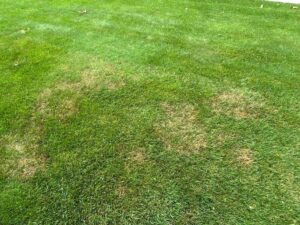
Brown patch appears as irregular brown or tan patches that may range from a few inches to several feet wide. A smoky ring often forms along the edges in the early morning.
When it shows up
Brown patch is most active when nighttime temperatures remain high and turf stays wet for extended periods.
Why it develops
- Excess moisture
- Evening or overnight watering
- Heavy nitrogen applications during summer heat
How to treat it
Brown patch thrives under warm, wet conditions. According to NC State Extension, extended leaf wetness combined with high humidity creates ideal conditions for this disease.
Treatment focuses on adjusting watering timing, managing fertility, and applying fungicide when disease pressure remains high.
What Is Dollar Spot and How Do You Fix It?
Dollar spot is a fungal lawn disease that causes small circular patches that can expand if left untreated.
What it looks like
Small, silver-dollar-sized spots that may merge into larger patches. Individual grass blades often show straw-colored lesions.
When it shows up
Dollar spot commonly appears during warm days and cool nights, especially in lawns with low nitrogen levels.
Why it develops
- Low fertility
- Extended leaf wetness
- Drought stress or compaction
How to treat it
- Adjust fertilization based on lawn needs
- Improve watering practices
- Increase mowing height
- Spot-treat with fungicide if damage spreads
What Is Red Thread Disease and Does It Require Treatment?
Red thread is a cool-season lawn disease that typically signals low nitrogen levels rather than severe turf damage.
What it looks like
Pink or red thread-like growths on grass blades that give lawns a reddish tint.
When it shows up
Red thread is most common in spring and fall during cool, wet conditions.
Why it develops
- Low nitrogen levels
- Prolonged moisture on turf
How to treat it
Red thread often resolves once turf health improves. Increasing nutrient balance, reducing leaf wetness, and maintaining proper mowing height are usually sufficient.
Chemical treatment is not always required.
What Is Pythium Blight and Why Is It So Serious?
Pythium blight is a fast-moving lawn disease that can cause rapid turf collapse during extreme heat and humidity.
What it looks like
Greasy, water-soaked patches that collapse quickly. A cottony white growth may appear early in the morning.
When it shows up
Pythium develops rapidly during very hot, humid weather, especially when airflow is poor.
Why it develops
- Overwatering
- Poor drainage
- Heavy traffic and soil compaction
How to treat it
According to NC State Extension, Pythium blight can spread rapidly and requires immediate action under hot, wet conditions.
Management includes stopping irrigation, improving drainage and airflow, and applying targeted fungicide as soon as symptoms appear.
What Mistakes Make Lawn Disease Worse?
Many lawn disease problems escalate due to well-intentioned mistakes.
Avoid:
- Watering at night
- Cutting grass too short
- Applying nitrogen during heat stress
- Ignoring early symptoms
- Treating without identifying the disease
NC State Extension emphasizes that proper identification is critical because different fungi respond to different treatments.
When Does Professional Lawn Disease Treatment Make Sense?
Professional evaluation is recommended when lawn disease spreads rapidly, affects multiple areas, or returns year after year.
Signs you may need expert help include:
- Rapid disease spread
- Repeated seasonal outbreaks
- Turf that fails to recover after weather improves
Effective treatment combines diagnosis, timing, and turf health. Blanket applications rarely solve the underlying problem.
The Triangle Lawn Care Approach to Lawn Disease
At Triangle Lawn Care, disease management starts with identifying why the problem developed, not just treating symptoms.
Our approach focuses on:
- Identifying the specific fungus involved
- Adjusting cultural practices first
- Applying treatments only when conditions warrant
- Strengthening turf to reduce future outbreaks
This strategy helps reduce recurrence and supports long-term lawn health across the Triangle.
Final Takeaway
Lawn disease is common in the Triangle, but it does not have to ruin your yard. Understanding the most common fungus types, recognizing early signs, and responding appropriately can limit damage and speed recovery.
Healthy turf, proper timing, and informed treatment decisions make the biggest difference.