

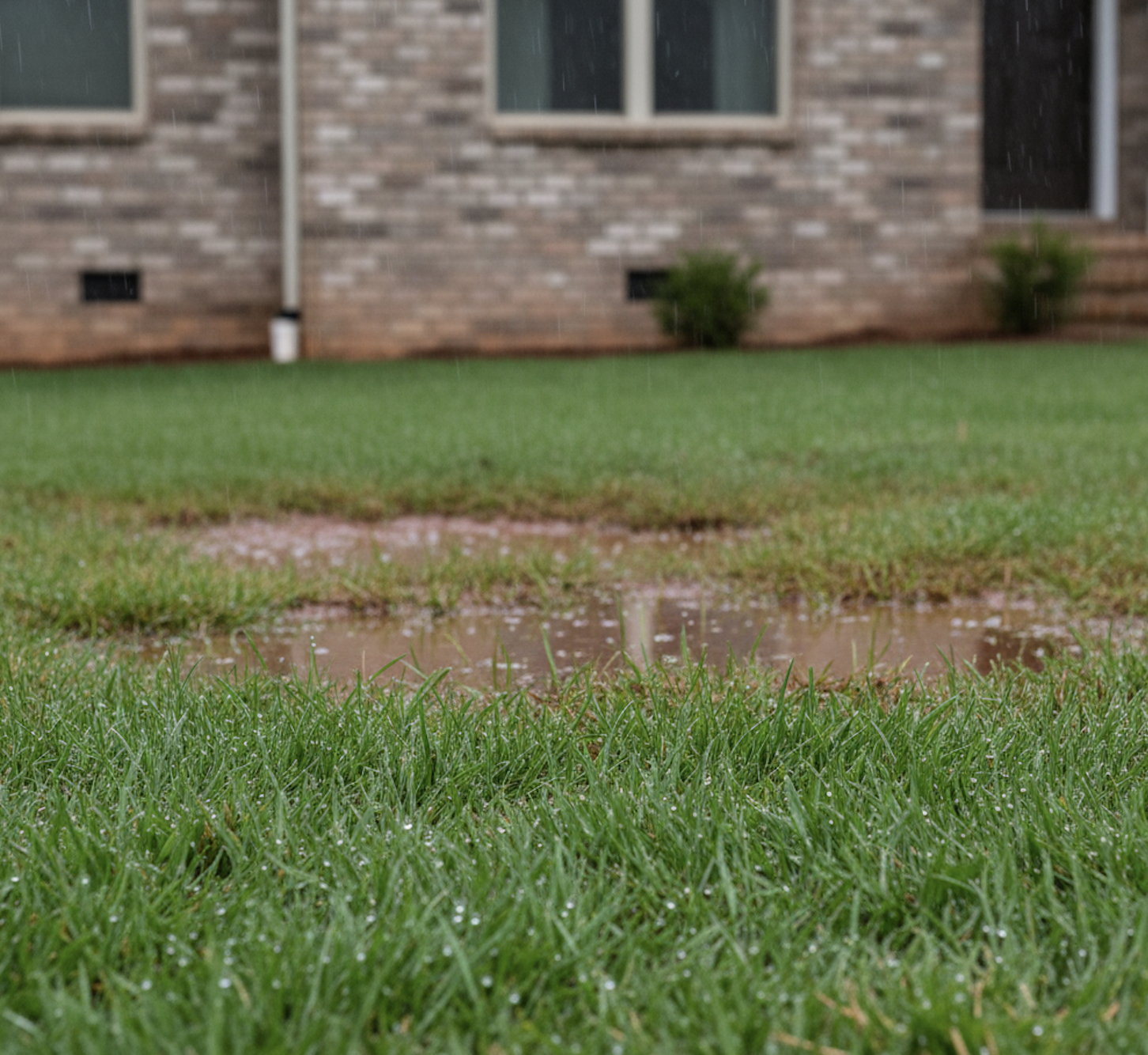
Spring rain in Raleigh, NC helps lawns break dormancy, but excessive rainfall can weaken roots, increase weeds, and trigger fungal disease. In clay-heavy Triangle soils, balance is critical. Proper timing of fertilization, pre-emergent, and aeration determines whether rain supports growth or creates stress.
Why Spring Rain Impacts Raleigh Lawns Differently
The Triangle sits on dense red clay soils often referred to as Raleigh clay. Clay holds water longer than sandy soil. That can help turf during dry stretches but can also create oxygen-poor conditions after heavy rain.
Warm-season and cool-season grasses common in our area include:
- Bermudagrass (Cynodon dactylon)
- Tall fescue (Festuca arundinacea)
Each responds differently to spring moisture.
According to North Carolina State University Extension TurfFiles, prolonged leaf wetness and mild temperatures increase turf disease risk during spring months.
Neighborhoods like Cary, Apex, Holly Springs, Wake Forest, and North Raleigh often experience pooling due to soil density and shade patterns.
How Does Spring Rain Affect Lawns in Raleigh?
Spring rain increases soil moisture, activates root growth, and accelerates weed germination at the same time.
Grass begins active growth when soil temperatures reach 55 to 65°F. Rain supports nutrient uptake during this phase. However, excess water limits oxygen in compacted soil.
This is why some lawns green evenly in March while others turn thin or patchy.
When Is Spring Rain Good for Your Lawn?
Spring rain helps when soil drains properly and treatments are timed correctly.
Benefits of moderate rain:
- Supports root development
- Activates fertilizer
- Moves pre-emergent into the soil barrier
- Encourages steady green-up
Healthy soil structure allows rain to soak in and move through efficiently.
When Does Spring Rain Start Hurting Your Lawn?
Spring rain becomes harmful when water lingers in the soil and reduces root oxygen.
Warning signs include:
- Yellowing turf
- Matted grass
- Mushrooms
- Increased weed pressure
Compacted soil and shaded areas feel this stress first.
Fungal diseases like brown patch thrive when turf remains wet overnight for extended periods.
Does Spring Rain Increase Weed Problems?
Yes. Spring rain speeds up weed germination faster than turf can fill bare spots.
Common Triangle weeds include:
- Crabgrass (Digitaria sanguinalis
- Annual bluegrass (Poa annua)
- Broadleaf weeds
Rain does not cause weeds. Thin turf and missed pre-emergent timing do.
Pre-emergent must be applied before soil temperatures consistently exceed 55°F to stop germination.
Can Too Much Rain Cause Lawn Disease?
Yes. Prolonged moisture increases disease pressure.
Fungal pathogens spread when:
- Leaf blades stay wet overnight
- Air circulation is poor
- Soil drainage is limited
According to NC State Extension, turf diseases like brown patch develop when grass remains wet for extended periods due to rain, humidity, irrigation, or poor drainage.
How Can You Tell If Rain Is Helping or Hurting?
Rain is helping if:
- Growth looks even
- Color improves gradually
- Bare spots fill in
Rain is hurting if:
- Turf looks thin
- Patches appear
- Weeds spread quickly
Even growth signals healthy soil. Stress signals compaction or poor timing.
Rain Impact on Triangle Lawns
| Lawn Condition | Spring Rain Effect | What Helps |
| Healthy soil | Supports steady growth | Proper Fertilization timing |
| Compacted soil | Reduces root oxygen and causes stress | Aeration |
| Thin turf | Increase weeds | Pre-emergent |
| Poor drainage | Increases fungal disease pressure | Soil improvement |
What Should Homeowners Do During a Rainy Spring?
- Avoid mowing wet turf
- Do not overwater
- Let soil dry between rain events
- Apply seasonally timed treatments
- Improve drainage in problem areas
For a complete month-by-month breakdown, follow our Spring Lawn Care Checklist for the Triangle.
Professional programs monitor soil temperature and rainfall patterns to adjust timing.
Local Lawn Note
Clay-heavy lots in Cary, Apex, and Wake Forest hold water longer. Shaded neighborhoods in North Raleigh often see slower drying times. Soil structure determines how rain behaves on your property.
Rain is not the enemy. Poor preparation is.
FAQs
1. Is spring rain good for grass in North Carolina? Yes. Spring rain supports growth when soil drains properly and treatments are timed correctly.
2. Does rain help fertilizer work better? Yes. Light to moderate rain helps fertilizer move into the soil for root uptake.
3. Can rain wash away lawn treatments? Heavy rainfall shortly after application can reduce effectiveness, especially in compacted soil.
You take pride in your yard. You want steady, visible progress.
We handle the plan. You enjoy the lawn.
Get your free lawn evaluation today and build a program designed for Triangle weather.