

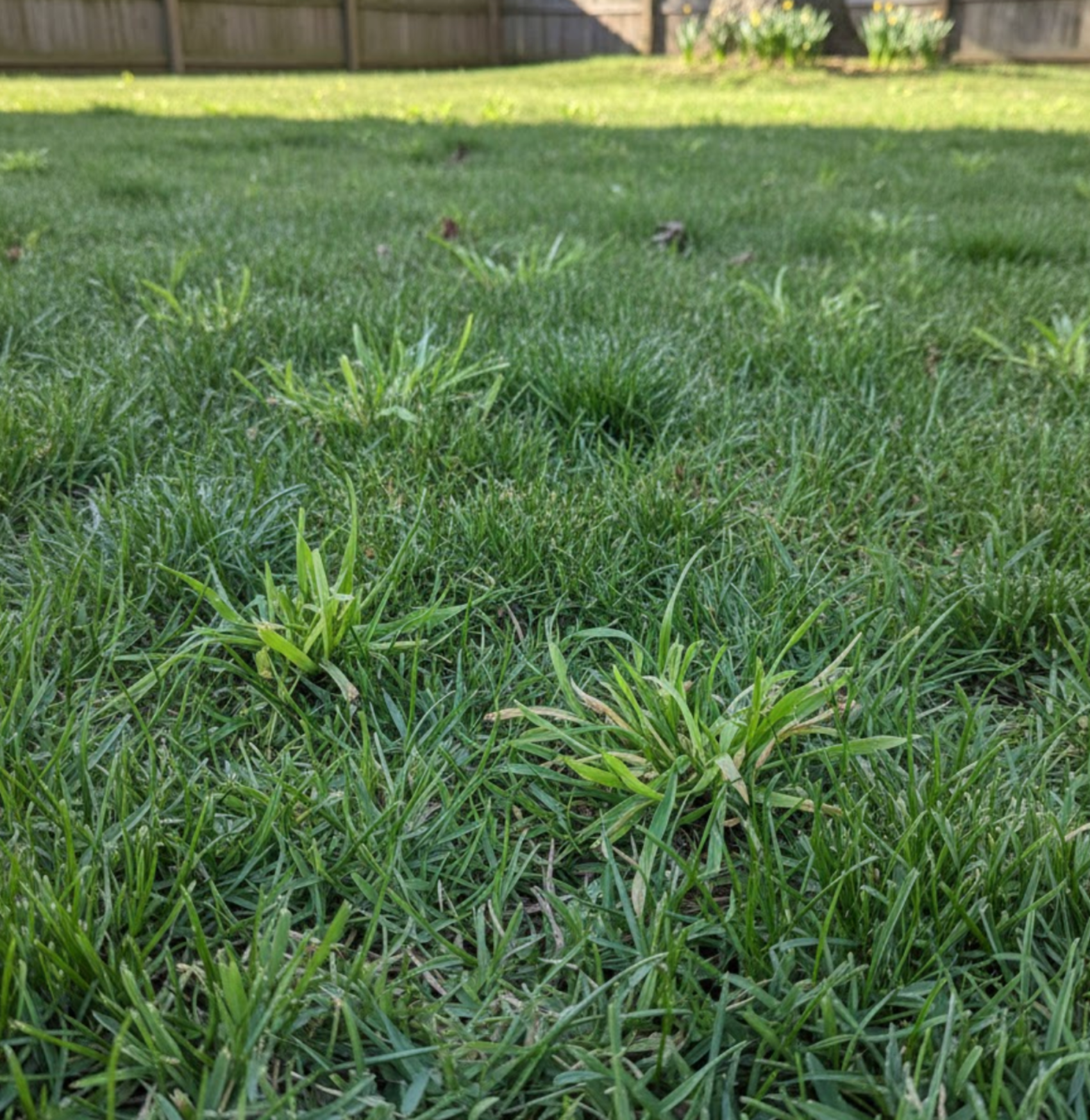
Spring weed control is a seasonal strategy that prevents new weeds, eliminates existing weeds, and strengthens turf during early growth. Pre-emergent treatments are important, but they only prevent certain weed seeds from germinating and do not control active weeds.
In the Triangle, effective spring weed control requires multiple steps timed to soil temperature, rainfall, and weed growth cycles.
What Is Spring Weed Control?
Spring weed control is the process of preventing and managing weeds as they germinate, emerge, and spread during the early growing season.
It includes:
- Preventing future weeds before they sprout
- Treating visible weeds already growing
- Strengthening turf so weeds struggle to return
Pre-emergent alone does not accomplish all three.
What Does Pre-Emergent Actually Do?
Pre-emergent creates a barrier in the soil that stops certain weed seeds from germinating.
It works best against:
- Crabgrass
- Goosegrass
- Foxtail
It does not kill existing weeds. If a weed has already emerged, pre-emergent will not affect it.
This is one of the biggest misunderstandings homeowners face in spring.
Why Do Weeds Still Appear After Pre-Emergent?
Weeds can still appear after a pre-emergent application because pre-emergent only prevents certain weed seeds from germinating. It does not kill existing weeds, and it cannot control every weed type or every growth condition.
Several factors contribute to this.
Some Weeds Were Already Growing
Many winter annuals and early spring weeds begin growing before pre-emergent is applied. Once a weed has emerged, the soil barrier no longer affects it.
Soil Temperatures Can Trigger Early Germination
In the Triangle, soil temperatures often rise and fall quickly in late winter and early spring. A short warm period can allow weed seeds to germinate before pre-emergent protection is fully in place.
The Soil Barrier Is Not Always Perfect
Heavy rainfall, foot traffic, and uneven coverage can weaken parts of the pre-emergent barrier. These gaps give weeds an opportunity to break through.
Pre-Emergent Does Not Stop Every Weed
Pre-emergent targets specific grassy weeds. Many common spring broadleaf weeds, including clover and chickweed, are not controlled by most pre-emergent products.
What Comes After Pre-Emergent?
Post-emergent weed control treats weeds that are already growing in the lawn. Unlike pre-emergent, these treatments are designed to eliminate visible weeds before they mature, produce seeds, and spread.
Post-emergent applications are used to:
- Eliminate visible weeds
- Stop seed production
- Limit spread across the lawn
Timing matters. Treating weeds early improves control and reduces the need for repeat applications later in the season.
When Should Post-Emergent Weed Control Be Applied?
Post-emergent weed control should be applied as soon as weeds are actively growing and identifiable.
In the Triangle, this typically begins:
- Late March through April for cool-season weeds
- April through May for early warm-season weeds
Early intervention reduces the need for heavier treatments later.
How Fertilization Supports Weed Control
A thick, healthy lawn crowds out weeds naturally.
Proper fertilization:
- Encourages dense turf growth
- Helps grass recover after winter dormancy
- Reduces open soil where weeds thrive
Spring fertilization should support growth without overstimulating weeds. Balance matters.
Why Timing Matters for Spring Weed Control
NC State Extension explains that effective weed control depends on soil temperature rather than calendar dates. In North Carolina, short warm periods in late winter can trigger weed germination earlier than expected, making proper timing and follow-up treatments critical for spring control.
Spring weed control success depends on when treatments are applied, not just what products are used. Applications that miss key growth windows allow weeds to mature, spread, and return later in the season.
Key timing factors include:
- Soil temperature
- Rainfall patterns
- Turf type
- Weed growth stage
Mistimed applications often lead to repeat weed issues, even when quality products are used. This is why professional lawn care programs follow a seasonal schedule rather than relying on one-off treatments.
Common Spring Weed Control Mistakes
Homeowners often struggle with spring weeds due to a few common missteps.
| Mistake | Why It Causes Problems |
| Relying only on pre-emergent | Does not treat existing weeds |
| Applying too late | Weeds mature and spread |
| Over-fertilizing | Encourages weed growth |
| Skipping follow-up | Allows new waves of weeds |
What Spring Weed Control Looks Like in the Triangle
Triangle lawns face unique pressure due to:
- Mild winters
- Early soil warm-up
- Frequent spring rain
- Mixed cool and warm season weeds
Neighborhoods like Cary, Apex, Holly Springs, Wake Forest, and North Raleigh often see multiple weed cycles in one spring.
A layered approach works best.
What Is a Complete Spring Weed Control Program?
A complete program includes:
- Pre-emergent weed prevention
- Post-emergent weed control
- Balanced fertilization
- Ongoing monitoring and adjustments
This approach reduces weed pressure now and protects the lawn into summer.
When Should You Start Spring Weed Control?
Spring weed control should begin before weeds dominate the lawn.
In most Triangle lawns, the window opens:
- Late February through early March for prevention
- March through May for active control
Waiting until weeds are widespread makes recovery slower and more expensive.
FAQ: Spring Weed Control
- Does pre-emergent stop all weeds? No. It prevents certain weeds from germinating but does not kill existing weeds or stop all species.
- Can I apply post-emergent after pre-emergent? Yes. This is often necessary and recommended for visible weeds.
- Will weeds come back if I skip spring treatments? Yes. Spring sets the foundation for weed pressure all year.
Triangle Lawn Care Spring Weed Control
Spring weeds do not mean your lawn is failing. They mean timing and strategy matter.
Triangle Lawn Care builds weed control programs designed for Triangle soil, weather, and turf types. Each step works together to reduce weeds now and prevent them later.